




From 25 May 2026, Decree No. 110/2026/ND-CP officially takes effect, creating a dedicated legal framework for extended producer and importer responsibility (EPR). Beyond clarifying which businesses are subject to the rules, how much must be recycled and how obligations can be fulfilled, the new regulation establishes more transparent mechanisms for data management, finance and recycling support, making EPR an important link in Vietnam’s transition toward a circular economy.
From post-consumer responsibility to product life-cycle management
Under the traditional linear economic model, a product typically follows the chain of “extraction – production – consumption – disposal”. Once a product becomes waste, responsibility for collection and treatment mainly falls on the waste-management system and local authorities.
EPR — Extended Producer Responsibility, or the extended responsibility of producers and importers — changes this approach. A company’s responsibility no longer ends when a product is sold; it extends into the post-consumer stage through recycling obligations or contributions of resources for waste treatment.
This is particularly significant for a circular economy. When the environmental cost of a product is reflected back to the producer, manufacturers have stronger incentives to use less material, choose recyclable materials, improve packaging design and increase the chance that post-use materials return to production cycles.
EPR was established in Vietnam’s 2020 Law on Environmental Protection and gradually detailed in Decree 08/2022/ND-CP and subsequent amendments. However, the earlier provisions sat within a broader environmental regulatory framework, while practical implementation increasingly required clearer rules on responsible entities, calculation of obligations, financial management, data and verification of results.
Decree 110/2026/ND-CP was issued on 1 April 2026 and takes effect on 25 May 2026 to specifically regulate implementation of Articles 54 and 55 of the Law on Environmental Protection concerning responsibility for recycling products and packaging and responsibility for waste collection and treatment. It also repeals Chapter VI and Appendices XXII and XXIII of Decree 08/2022/ND-CP. EPR obligations from 2026 onward are implemented under Decree 110, while obligations for 2025 and earlier continue to be handled under the previous regulatory system.
Clarifying who bears responsibility
One notable change is a more specific determination of the entities responsible for implementing EPR.
The Decree does not merely assign responsibility to producers and importers in general. It also addresses common complex situations such as contract manufacturing, entrusted imports, multiple production facilities using the same brand, and relationships between parent companies and independently accounting units.
For example, where a product under the same brand is manufactured at several facilities, the entity responsible for goods labeling bears the recycling responsibility. In contract manufacturing, responsibility lies with the party commissioning the manufacturing; for entrusted imports, the obligation is linked to the entity responsible for goods labeling.
For packaging, the scope is commercial packaging, including direct packaging and outer packaging for many categories of goods such as food, cosmetics, pharmaceuticals, fertilizers, animal feed, veterinary medicines, detergents and cement.
The Decree also specifies cases exempt from recycling responsibility, including products and packaging for export, temporary import for re-export, or research, education and testing purposes; certain producers and importers whose total revenue falls below exemption thresholds; and cases where packaging is recovered by the producer itself and reused for market circulation at a rate that meets regulatory requirements.
Clearly identifying “who is responsible” is important for reducing gaps or overlaps in obligations across increasingly complex supply chains.
Recycling must deliver results, not merely collection
Decree 110/2026/ND-CP continues to apply mandatory recycling rates and recycling specifications to individual groups of products and packaging.
Importantly, the requirement does not stop at whether waste has been collected; it focuses on the output produced by the recycling process.
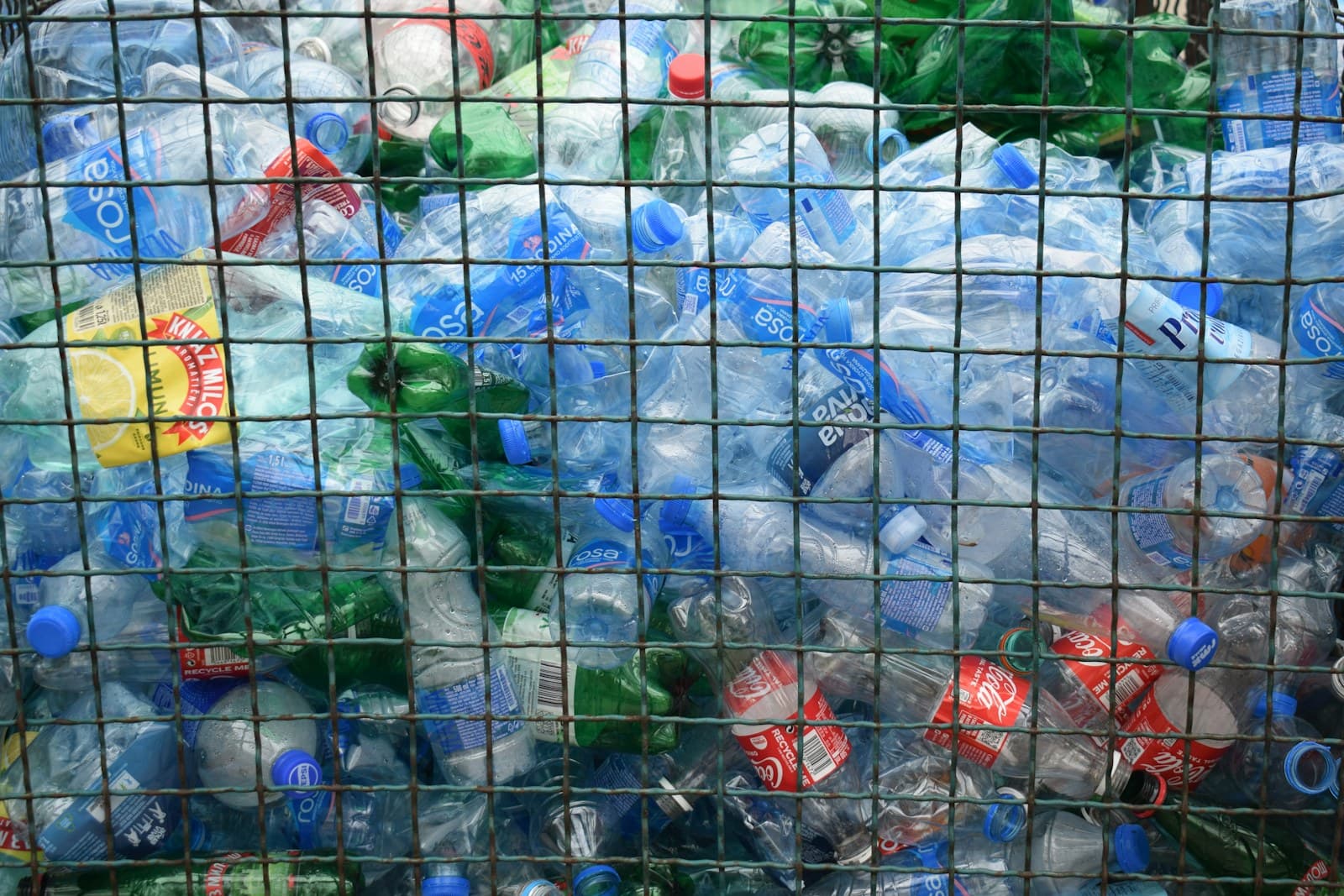
Under Appendix I of the Decree, current mandatory recycling rates are 20% for paper and cardboard packaging; 15% for composite multilayer paper packaging; 22% for aluminum packaging; 20% for iron and other metal packaging; and 22% for rigid PET packaging. For each material type, recycling specifications are also tied to defined outputs, such as market-grade pulp, metal billets or market-grade plastic pellets.
This helps shift the focus from “how much has been collected?” to “have post-use materials actually returned to the economy?”.
Mandatory recycling rates will be adjusted upward every three years, with each adjustment adding no more than 10%; the first adjustment is scheduled for 2029. Volumes recycled beyond a company’s obligation may also be carried forward for credit in subsequent years.
For road vehicles specifically, recycling responsibility applies to vehicles placed on the market by producers or importers from 1 January 2027.
Businesses have more options for fulfilling EPR
Not every business is large enough to build its own take-back and recycling network. The new legal framework therefore continues to allow flexibility in how obligations are fulfilled.
Producers and importers may organize recycling through suitable options, including doing it directly, hiring a recycler or authorizing a producer responsibility organization (PRO). In cases allowed by law, businesses may instead make a financial contribution to the Vietnam Environment Protection Fund rather than directly organizing recycling.
The Decree also clarifies the legal status of PROs, requirements for recyclers, management of records and supporting documents, and other recycling-related conditions. This provides a foundation for an ecosystem in which producers, collectors, recyclers and PROs can work together instead of every company having to build the entire post-consumer chain itself.
Making EPR data and financial flows more transparent
An EPR framework can operate effectively only when products placed on the market, recovered volumes, recycling outcomes and financial contributions can be tracked and verified.
Decree 110/2026/ND-CP therefore includes dedicated provisions on the National EPR Information System. The system supports registration, declarations, reporting, management and supervision of producer and importer responsibilities, while also providing mechanisms for connection with relevant national and sectoral databases.
Under the rules, before 1 April each year, businesses choosing to organize recycling must register their plans and report recycling results through the National EPR Information System. Where a business chooses a legally prescribed financial contribution to the Vietnam Environment Protection Fund, it is not required to register, implement and report a recycling plan under this procedure.
The Decree also requires stronger verifiability of recycling data, separate management of records and supporting documents, and mechanisms for confirming results. This is important to prevent EPR from existing only on paper and to provide regulators with a basis for evaluating the policy’s real-world effectiveness.
Alongside Decree 110, the Ministry of Agriculture and Environment issued Circular 24/2026/TT-BNNMT, effective from 25 May 2026, guiding several matters concerning contribution levels, registration, reporting and support mechanisms, further completing the toolkit for practical EPR implementation.
EPR is more than a compliance cost
From a business perspective, EPR initially creates additional obligations: tracking products placed on the market, building material data, selecting a compliance method, organizing recycling or making financial contributions, and demonstrating results.
But viewing EPR only as an “environmental fee” would narrow the role of the mechanism.
When post-consumer costs become part of production economics, businesses gain incentives to design products from the outset to use less material, reduce packaging structures that are difficult to separate, increase recyclable content and use recycled materials. Over time, these changes can reduce both EPR costs and dependence on virgin raw materials.
At the economy-wide level, EPR resources also create additional demand for professional collection, sorting and recycling. The Decree establishes mechanisms to support recycling activities, with recycling effectiveness and technology level considered when allocating resources, helping encourage deeper recycling solutions rather than merely collecting waste and moving it elsewhere.
This is where EPR and the circular economy meet: environmental responsibility is no longer confined to the end of the waste-treatment pipe but is brought back into product design, material selection and production organization.
From “having rules” to “making them work”
With Decree 110/2026/ND-CP, Vietnam now has a more dedicated and clearer framework for EPR. The policy’s effectiveness, however, will still depend on practical implementation.
Source-separation infrastructure, collection networks, recycling-industry capacity, data quality and the ability of businesses to connect with recovery operators remain critical links. Businesses, especially small and medium-sized enterprises, also need time to build material-data systems and integrate EPR requirements into management processes.
The next phase of EPR in Vietnam will therefore be about more than complying with a new decree. It is also about forming a market in which products are considered across their full life cycle, waste has a pathway back into raw materials, and environmental costs are increasingly reflected in production and consumption decisions.
Decree 110/2026/ND-CP can thus be seen as an important shift from simply establishing EPR responsibility to building a system that can operate, measure and supervise it more clearly. If implemented consistently, EPR can not only reduce waste pressure but also create stronger incentives for green design, the recycling industry and Vietnam’s transition to a circular economy.
References
- Nghị định số 110/2026/NĐ-CP về trách nhiệm tái chế sản phẩm, bao bì và xử lý chất thải — Chính phủ
- Thông tư số 24/2026/TT-BNNMT hướng dẫn Nghị định 110/2026/NĐ-CP — Bộ Nông nghiệp và Môi trường
- Đối tượng phải thực hiện trách nhiệm tái chế sản phẩm, bao bì — Báo Điện tử Chính phủ